
🔥Optimize how you learn grammar🔥
My method + the ultimate list of 🇯🇵 Anki decks to boost grammar retention.

Hello again!
I often receive messages from people who struggle learning grammar, asking me how I manage to remember all the different structures 😵💫.
To help all of you get rid of this problem, I have written this post to explain the only method that has worked for me to overcome this obstacle in my Japanese studies 🏋️♀️.
Article structure:
First, I tell you about my personal experience studying grammar.
Then, I explain how to use Anki to fix this.
Finally, I share with you an incredibly helpful list of 🇯🇵 Anki decks (N3-N1) so you can apply this method instantly.
So… let’s get started! 💪

😭My grammar struggles😭
When I started studying for the N3 in October 2021, I felt overwhelmed about the sheer amount of grammar points that my 新完全マスター copy contained. As I went through the book, I realized that I was forgetting the grammar points that I had previously learnt. At the same time, I did not have the time to review all the previously studied lessons every day 😥.
I was very frustrated, and I thought that I was not smart enough to learn Japanese 😔. But I was determined not to give up. Thus, after my good experience learning vocabulary with SRS, I decided to solve my problem by reviewing new grammar structures on Anki. And it actually worked really well, with my N3 score reaching a whopping 180/180! 😉
🛠️Implementing the method🛠️
Using Anki to review grammar is actually very simple.
You will first need to decide what textbook/grammar list you would like to follow and find its respective grammar deck. If it doesn’t exist, you can create your own notes all at once or as you encounter the grammar points.
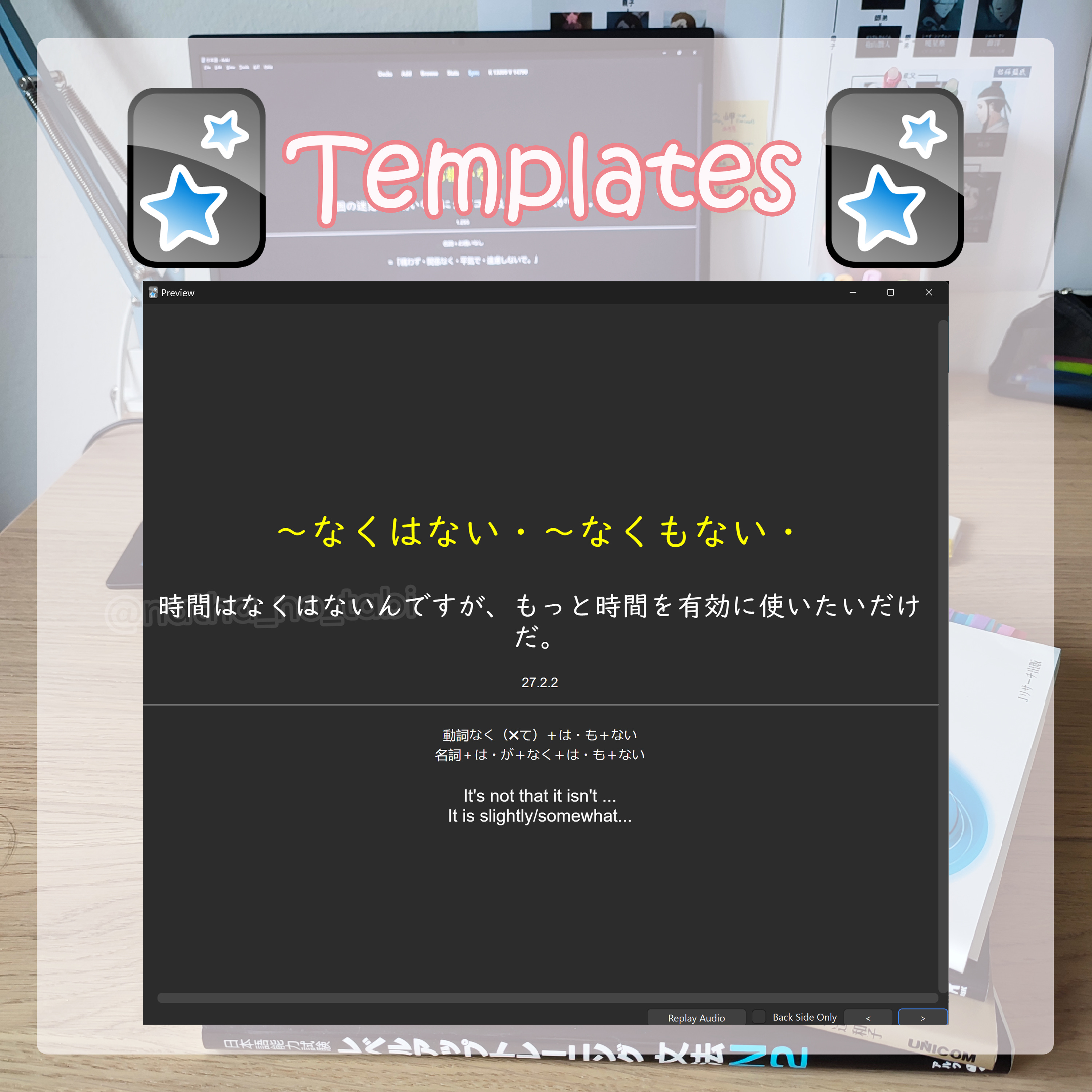
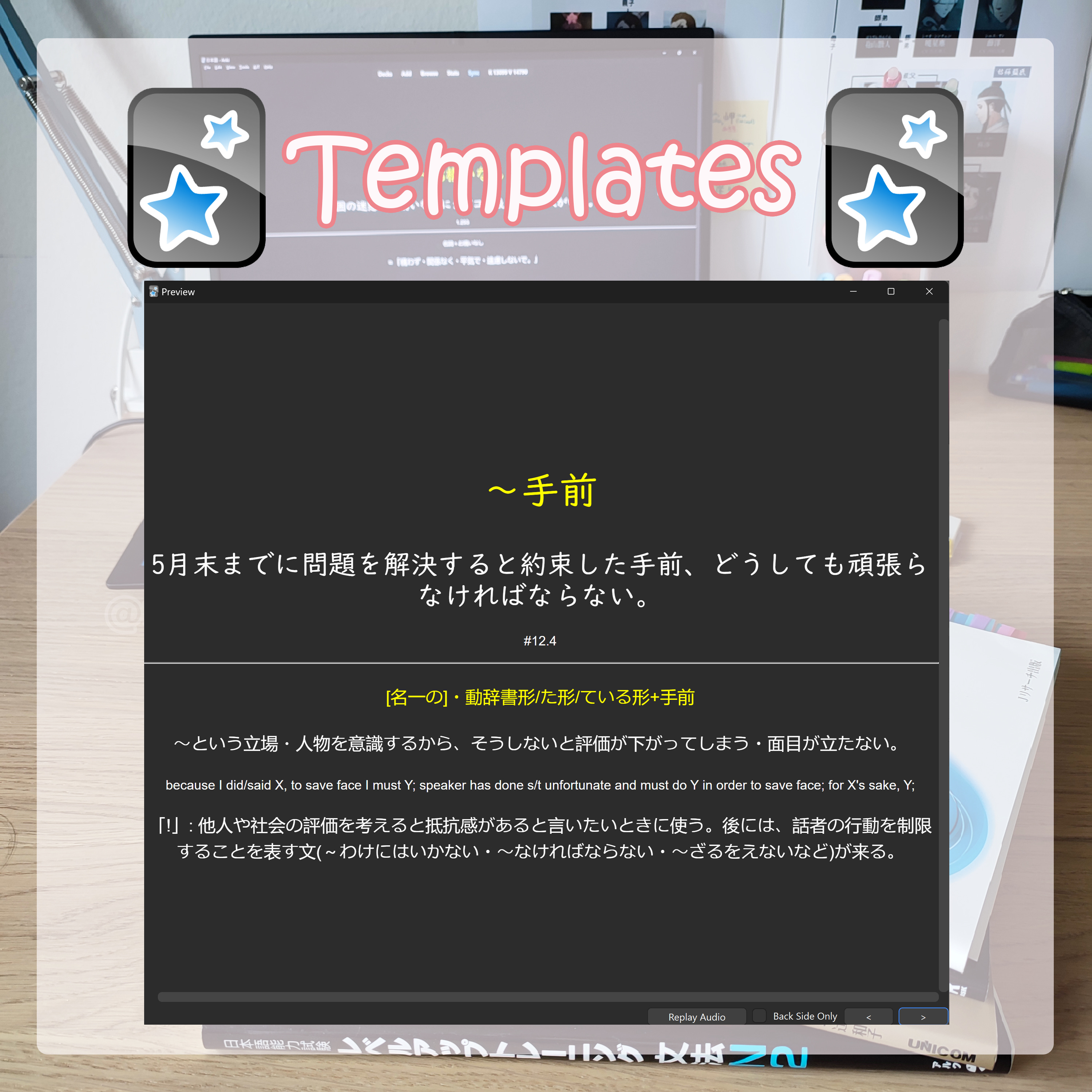
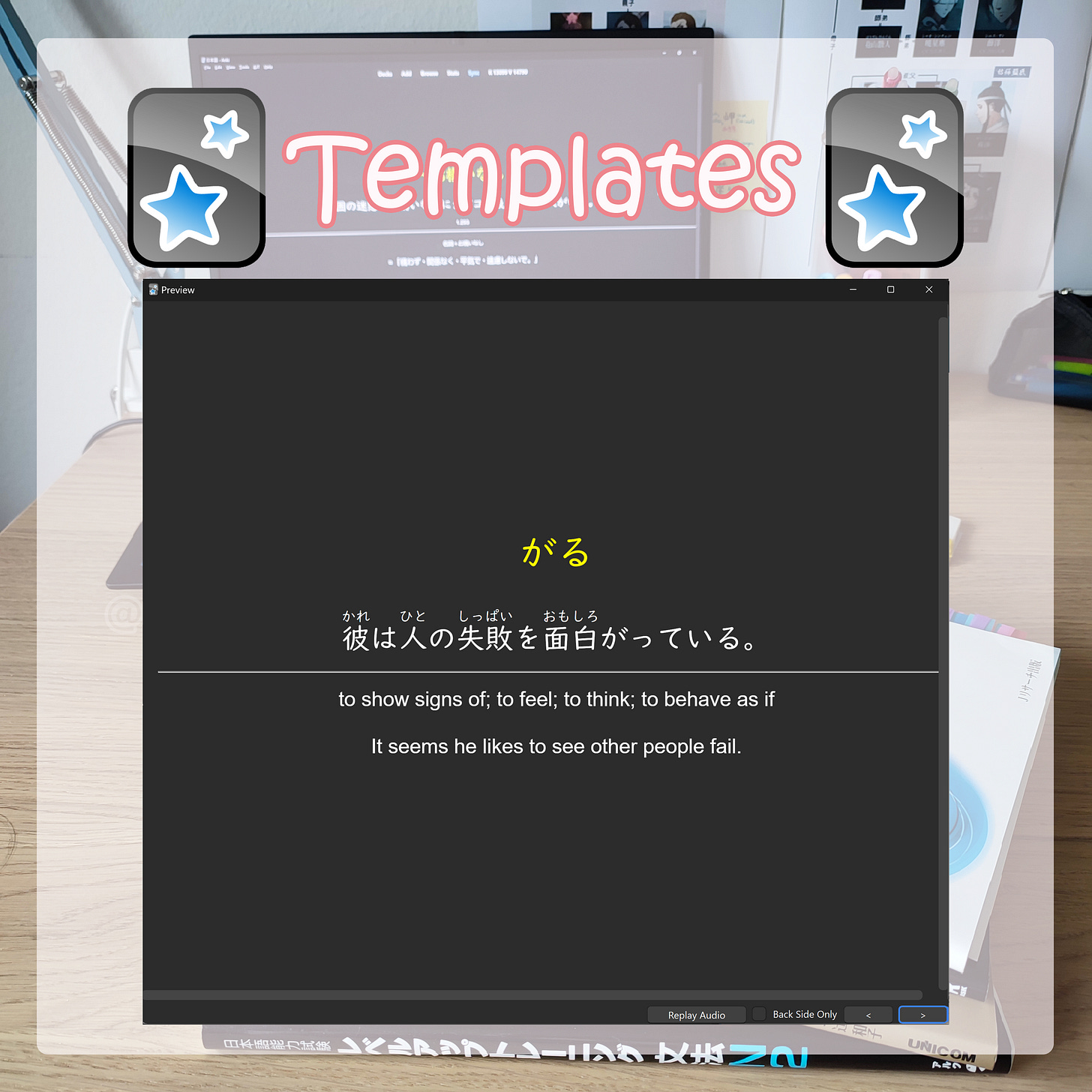
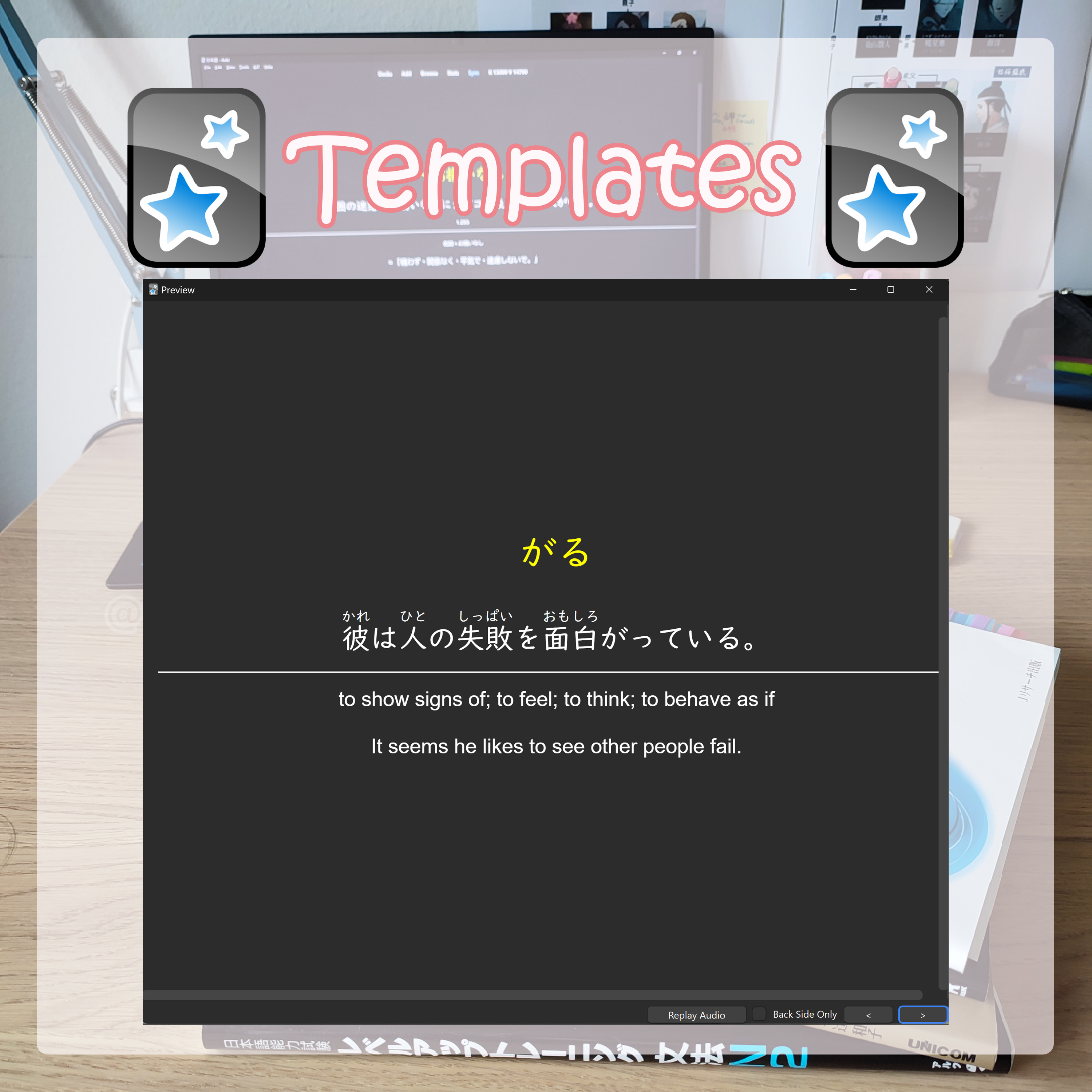
Grammar note contents:
The target grammar structure & its syntax (these can be in separate fields).
One (or several) example sentence(s) to help you grasp how it is used.
An explanation (in 🇬🇧 or 🇯🇵) of the grammar point. This can just taken from your textbook or a grammar dictionary.
Tip: having two explanations (a brief one and a more detailed one), can speed up your reviews, since you can check the long explanation only when you fail the card and need more context.And that’s basically it! Now you just need to study the notes that correspond to the grammar points you learnt that day and keep reviewing them on Anki like vocabulary cards. 😁
Of course, if you are doing immersion the same principle applies, you will just have to study the grammar points that you encounter in the wild. 😉
Card template examples
For reference, here are two examples of cards that I often use:
Top: my personal decks.
Bottom: 新完全マスター文法 shared decks.
🏆Recommended 🇯🇵 grammar decks🏆
Now, I know that few people have time these days to make their own Anki cards from scratch.
Therefore, to make your life easier, I have compiled a list of decks that you can use to start using this study method. Of course, you can modify them according to your needs.
Now, there are three types of decks in this list:
The best decks for the rigorous 新完全マスター series (N3-N1).
My personal decks that I have carefully built throughout the last 2 years as I encountered expressions from other JLPT prep materials. These are a mix from cards I created myself and from shared decks.
Two grammar “banks” that contain most of the grammar structures you might encounter throughout your studies.
📗N3 decks📗
新完全マスター文法N3 (Ankiweb): first grammar deck that I used. It contains all the example sentences for each of the structures presented in the book.
My personal N3 grammar supplemental deck: contains the grammar points I did not know after doing 新完全マスター from the drill books:
ドリル&ドリルN3文法.
パワードリル文法N3.
ドリル&模試N3.
新にほんご500問N3.


📕N2 decks📕
新完全マスター文法N2 (Ankiweb): contains all the example sentences for each of the structures presented in the book.
My personal N2 grammar supplemental deck: contains the grammar points I did not know after doing 新完全マスター from the drill books:
ドリル&ドリルN2文法.
パワードリル文法N2.
ドリル&模試N2.
新にほんご500問N2.
パターン別徹底ドリルN2.
レベルアップトレーニング文法N2.


📘N1 decks📘
新完全マスター文法N1: based off a spreadsheet I found a while back that contains all the example sentences in the book.
My personal N1 grammar supplemental deck: contains grammar points I did not know from the following drill books (most notes include in the “ID” field what specific exercise the expression appeared):
ドリル&ドリルN1文法.
パワードリル文法N1.
ドリル&模試N1.
新にほんご500問N1.
ベスト総合問題集N1.
日本がわかる、日本語がわかる.
N1この一冊で合格する (日本語の森N1).


🎁 Bonus: Grammar “banks” 🎁
Both of these decks are great to save some time making cards for grammar points that you encounter when studying:
Monolingual deck (sent to me by the awesome rubygagotoku on Instagram): explanations are solely in Japanese. It contains several example sentences per grammar point.

Japanesetest4you (Ankiweb): one example sentence per card, extracted from the well-known site of the same name. The explanations are in English.

Congratulations for making it to the end! 🎉With this, you have all the necessary tools you need to boost your grammar retention! 👏
❓Also, if you have any questions, do not hesitate to post a comment down below and I will make my best to help you 😊.
See you soon with more valuable content,
~𝙽𝚊𝚝𝚑𝚊
Remarks

1️⃣ My card templates are optimized for dark mode. This can easily be changed by modifying the CSS colors.

2️⃣ The notes I create usually include in the “ID” field in what specific exercise the expression appeared.
It is pretty intuitive, but just in case here is the notation & some examples:
🔖ドリル&ドリル文法: section_no.question_no, i.e. 2.10.
🔖パワードリル文法: drill_no.exercise_no.question_no, i.e. 25.2.3.
🔖ドリル&模試: drill_no.exercise_no.question_no, i.e. 10.4.1.
🔖新にほんご500問: week_no.day_no.question_no, i.e. 3.5.320.
🔖パターン別徹底ドリル: drill_no.exercise_no.question_no, i.e.  25.2.3.
🔖日本がわかる、日本語がわかる: section_no.chapter_no, i.e. 8.3.

3️⃣ I checked the cards for mistakes, but there might still be some typos in the explanations and cards with missing IDs. If you spot any, please let me know and I will correct them!🙏
Hey! Mind sharing your Chinese grammar decks too? Appreciate it!
Did you study 1 card per grammar point (multiple sentences per card) or multiple cards per grammar point (1 sentence per card)